.avif)
Dental Bone Grafting in Arlington Heights, IL
If you've been told you need a dental bone graft in Arlington Heights IL before moving forward with an implant — or if bone loss was discovered after a tooth extraction — you're in the right place. At Arlington Comfort Dental, Dr. Debbie Rhie, DMD performs bone grafting in-office, so there's no need for a specialist referral. New patients are always welcome, evening appointments are available on Mondays and Wednesdays, and we accept Aetna, Delta Dental, Blue Cross Blue Shield, and many other major insurance plans. If the idea of a bone graft feels unfamiliar or a little intimidating, that's completely understandable — and we're here to walk you through every step at your pace.


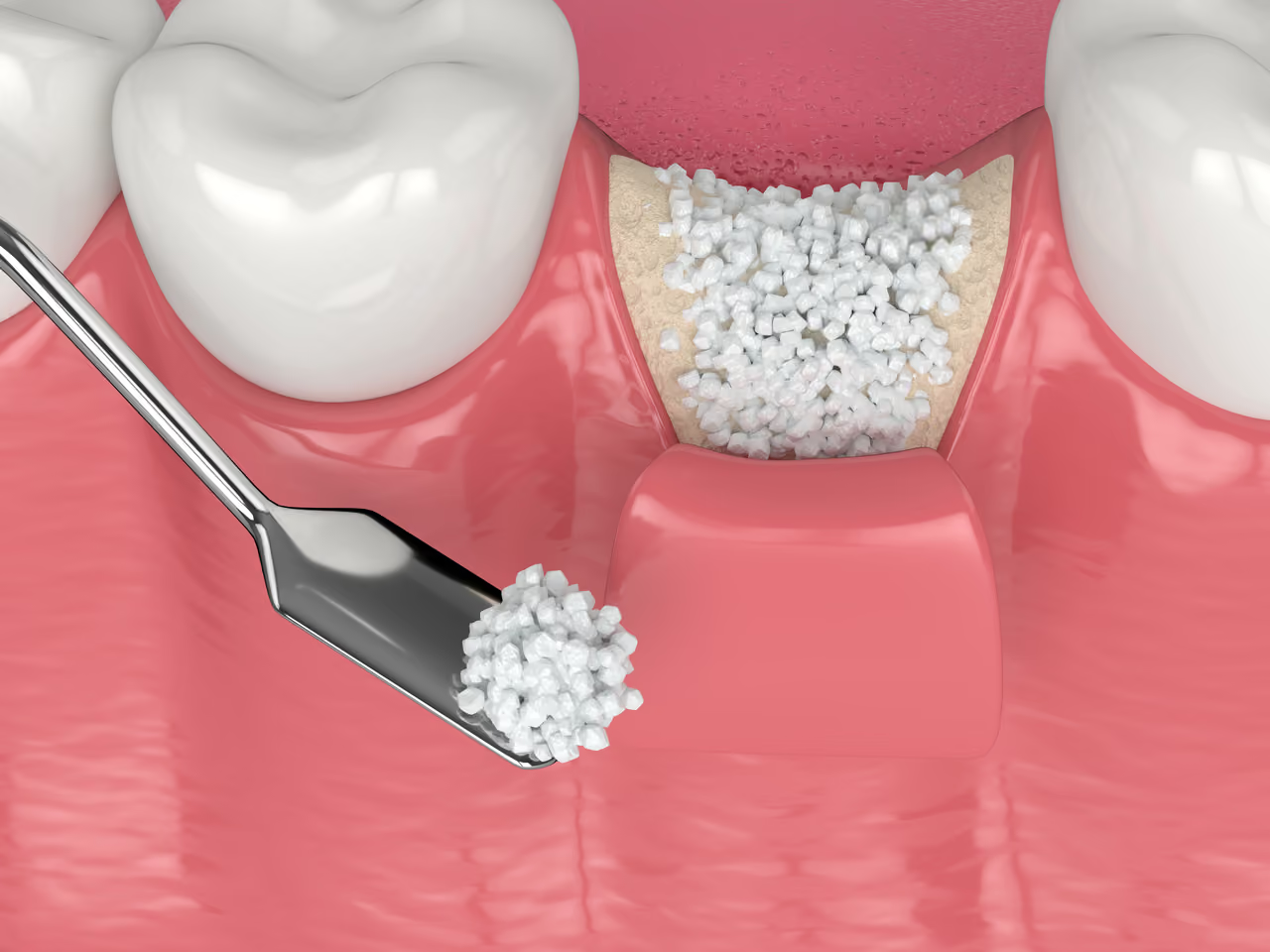
What Is a Dental Bone Graft?
A dental bone graft is a procedure that rebuilds or reinforces the jawbone where volume has been lost. Bone graft material — which may come from a donor source, a synthetic substitute, or in some cases your own bone — is placed at the site that needs support. Over the following months, your body integrates the graft into the existing bone, creating a stable foundation for whatever comes next, whether that's an implant or simply preserving the shape of your jaw.
Why Jawbone Loss Happens After Tooth Loss
When a tooth is removed or falls out, the jawbone beneath it no longer receives the stimulation it needs to stay dense. Without that signal, the bone begins to resorb — meaning the body gradually breaks it down. This process can start within weeks of a tooth loss and continues over time. The longer the gap goes unfilled, the more bone may be lost.
Types of Bone Grafts Dr. Rhie Performs
Dr. Rhie performs several types of bone grafts depending on your situation. A socket preservation graft is placed immediately after a tooth extraction to protect the site. A ridge augmentation rebuilds the jaw ridge where significant bone loss has already occurred — learn more on our Ridge Augmentation page. In all cases, the goal is the same: restoring enough bone volume to support a healthy, lasting outcome.
Who Needs Bone Grafting?
After a Tooth Extraction
When a tooth is removed, placing a bone graft at the same time is often recommended to preserve the socket. This is especially important if you're considering an implant later. Our Tooth Extractions & Wisdom Teeth Removal page has more detail on how extractions and grafting can work together.
Before Dental Implant Placement
Implants need a certain amount of healthy bone to anchor securely. If too much bone has been lost, an implant cannot be placed until the site is rebuilt. A bone graft in Arlington Heights with Dr. Rhie is often the first step in the implant process — not a detour, but a necessary foundation.
What Happens If Bone Loss Goes Untreated
Jawbone loss doesn't pause on its own. As bone continues to resorb, adjacent teeth may begin to shift, the facial structure can change, and the window for straightforward implant placement narrows. What might be a routine graft today can become a more involved — and more costly — procedure if addressed later. Acting sooner tends to keep your options open.
Benefits of Bone Grafting at Arlington Comfort Dental
- In-office procedure — Dr. Rhie performs bone grafting right here, so you don't need to navigate a referral to an oral surgeon across town.
- Same doctor, every visit — You'll see Dr. Rhie at every appointment, from your initial consultation through your recovery check-ins.
- Insurance accepted — We work with Aetna, Delta Dental, Blue Cross Blue Shield, and other major plans. Visit our Insurance & Financing page for details.
- Evening availability — Monday and Wednesday appointments until 6 PM make it easier to fit care around your schedule.
- Patient-paced care — There's no rush and no judgment. Dr. Rhie will explain everything clearly and answer every question before moving forward.
Bone Grafting vs. Dental Implants — How They Work Together
Bone grafting and dental implants are not competing options — they're sequential steps. A graft rebuilds the jaw; an implant replaces the tooth root once the bone is ready. For many patients, Dr. Rhie manages both stages under one roof, which means fewer offices, fewer introductions, and a more connected treatment experience. If you're exploring implants, our Dental Implants page explains how the full process works from start to finish. Part of our Oral Surgery & Specialty scope is making sure patients can move through every phase of care without being handed off to a stranger.
What to Expect During and After Your Bone Graft
The Procedure Step by Step
Dr. Rhie begins by numbing the area with local anesthesia so you're comfortable throughout. A small incision is made in the gum tissue to access the bone site, the graft material is placed and secured, and the area is closed. Most grafting appointments take less than an hour, depending on the size of the site.
Healing, Recovery, and Next Steps
Some swelling and mild soreness in the first few days is normal. Most patients manage comfortably with over-the-counter pain relief and a soft diet for a short period. Full integration of the graft — the point at which the bone is ready for an implant — typically takes three to six months. Dr. Rhie will monitor your healing at follow-up visits and let you know when you're ready for the next step.
Frequently Asked Questions About Bone Grafting
Question text goes here
Answer text goes here
How long does a dental bone graft take to heal?
Most patients need three to six months for the graft to fully integrate with the existing jawbone before an implant can be placed. The timeline varies based on the size of the graft and your body's healing response. Dr. Rhie will give you a personalized estimate at your consultation.
Does bone grafting hurt?
The procedure is performed with local anesthesia, so most patients feel little to no discomfort during the graft itself. Mild soreness and swelling in the days after are normal and manageable with over-the-counter pain relief. Dr. Rhie takes a patient-paced approach and will walk you through what to expect before, during, and after.
Will my insurance cover bone grafting?
Coverage depends on your individual plan. Arlington Comfort Dental accepts Aetna, Delta Dental, Blue Cross Blue Shield, and several other major insurers. Our team can review your benefits before your appointment so you have a clear picture of your out-of-pocket costs. See our Insurance & Financing page for a full list of accepted plans.
Can I get a bone graft and implant at the same time?
In some cases, yes — a socket preservation graft placed at the time of extraction and an implant placed shortly after can reduce the overall timeline. Whether this approach is right for you depends on the amount of bone available and other individual factors. Dr. Rhie will evaluate your situation and explain the best sequence for your care.
Ready to take the first step toward a stronger, healthier smile?
A dental bone graft Arlington Heights IL patients need is available right here at Arlington Comfort Dental — no specialist referral required. Call us to schedule a consultation with Dr. Rhie, and we'll go at whatever pace feels right for you.
.svg)