.avif)
Ridge Augmentation in Arlington Heights, IL
When a tooth is lost or removed, the jawbone beneath it can begin to shrink — sometimes faster than most patients expect. Dr. Debbie Rhie performs ridge augmentation Arlington Heights IL patients need to rebuild that lost bone volume and restore the jaw's natural shape before placing dental implants. This is a specialized procedure offered directly at Arlington Comfort Dental, a privately owned practice welcoming new patients with evening availability on Mondays and Wednesdays. Major insurance plans — including Aetna, Blue Cross Blue Shield, and Delta Dental — are accepted.


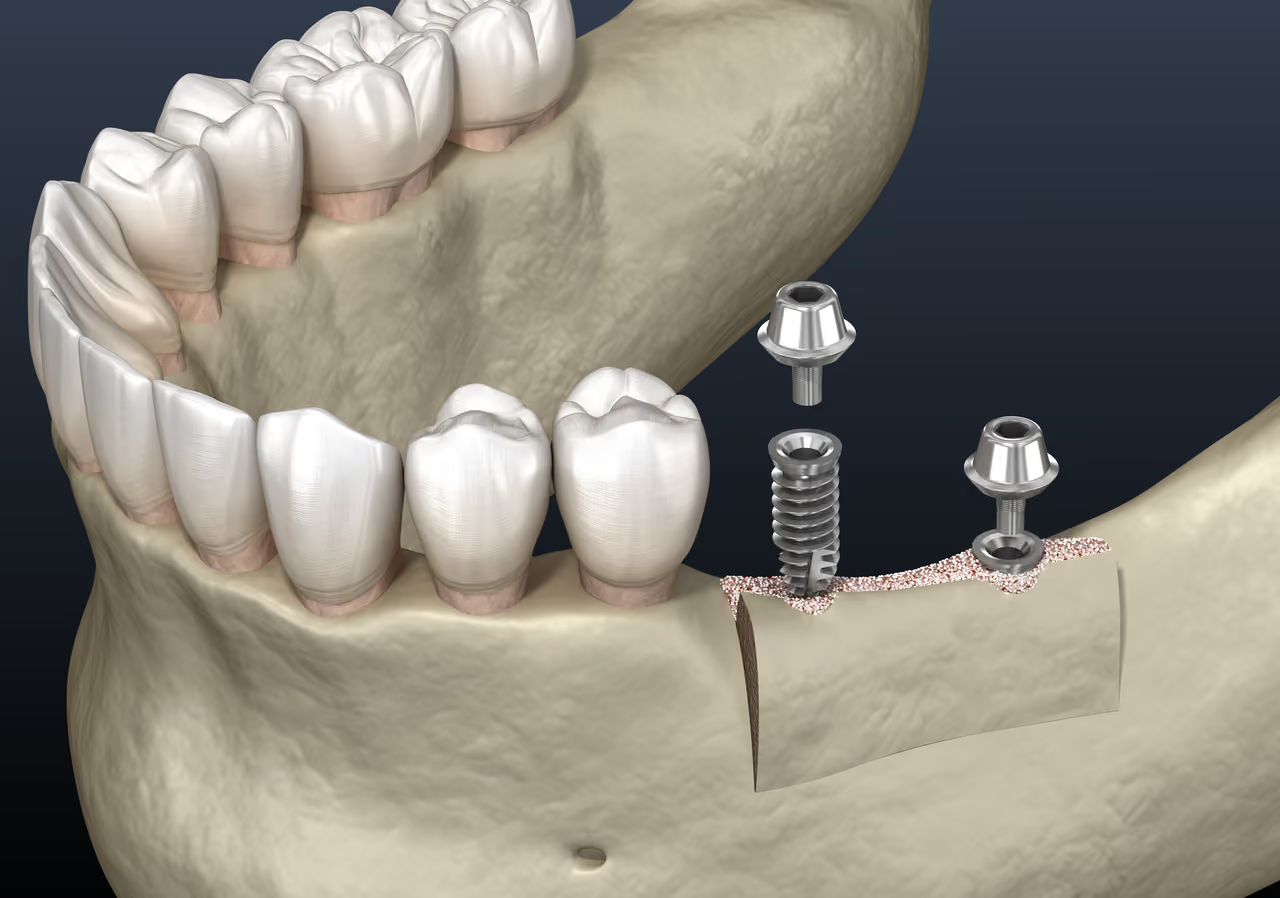
What Is Ridge Augmentation?
Ridge augmentation is a procedure designed to restore the height and width of the alveolar ridge — the curved band of bone in your jaw that once held your tooth roots. When that bone shrinks or collapses after a tooth is lost, it can make implant placement difficult or impossible without first rebuilding the foundation.
How the Alveolar Ridge Changes After Tooth Loss
Your jawbone stays healthy in part because tooth roots stimulate it with every bite. Once a tooth is gone — whether from extraction, injury, or disease — that stimulation stops. The bone begins to resorb, meaning the body gradually reabsorbs it. Within the first year after tooth loss, significant bone volume can be lost. This is why timing matters and why patients exploring implants often need a ridge evaluation before moving forward. Learn more about how tooth extractions can affect the surrounding bone.
Who Is a Candidate for Ridge Augmentation?
You may be a candidate if you've experienced bone loss after a tooth removal, have a collapsed or narrow ridge that won't support an implant, or were told in the past that implants weren't possible due to insufficient bone. Dr. Rhie evaluates each patient individually using digital X-rays and a thorough exam to determine whether alveolar ridge augmentation is the right next step.
Benefits of Ridge Augmentation Before Dental Implants
Rebuilding the ridge before implant placement isn't just a preparatory step — it's what makes a stable, long-lasting implant possible. Patients who take this step first are setting themselves up for a much stronger outcome.
How Ridge Restoration Supports Long-Term Implant Success
A dental implant needs adequate bone depth and width to integrate properly and stay secure over time. Ridge augmentation restores those dimensions, giving the implant a stable base that helps it function like a natural tooth root. Without sufficient bone, an implant is at higher risk of failure or may not be placeable at all. Patients who invest in this preparatory step typically experience more predictable, durable implant results.
What Happens If You Skip Ridge Augmentation?
If the ridge isn't restored before implant placement and bone volume is insufficient, the implant may fail to integrate — or your provider may determine that implants aren't a viable option at all. In some cases, skipping augmentation means settling for a less stable restoration or facing more extensive treatment later. Addressing bone loss now, while it's manageable, is generally a more straightforward path than waiting.
Ridge Augmentation vs. Bone Grafting — What's the Difference?
These two procedures are closely related, and patients often hear both terms in the same conversation. Understanding the distinction helps you know what to expect from your treatment plan.
When Ridge Augmentation Is Recommended Over Bone Grafting
Bone grafting is a broad term for any procedure that adds bone material to the jaw. Ridge augmentation is a specific type of bone grafting focused on rebuilding the contour and volume of the alveolar ridge — the visible curved bone structure — after it has collapsed or resorbed. When the goal is to restore the ridge's shape so it can support an implant, ridge augmentation is the more precise term for that targeted approach.
When Both Procedures May Be Used Together
In some cases, a patient may need bone grafting in a specific defect area alongside a broader ridge augmentation to fully restore the jaw's foundation. Dr. Rhie will outline exactly which procedures apply to your situation during your consultation. The oral surgery and specialty services offered at Arlington Comfort Dental are designed to address a range of bone and tissue needs without requiring a separate specialist.
What to Expect at Arlington Comfort Dental
Dr. Rhie handles ridge augmentation personally — the same doctor you meet at your consultation is the one who performs your procedure and sees you through recovery.
Your Ridge Augmentation Consultation with Dr. Rhie
Your first visit focuses on understanding your goals and evaluating your jaw structure. Dr. Rhie will review your X-rays, examine the ridge, and discuss your implant timeline. She'll explain what the procedure involves, answer your questions without rushing, and make sure you feel confident before moving forward. There's no pressure and no guesswork — just a clear plan tailored to you.
The Procedure and Recovery Timeline
Ridge augmentation is typically performed under local anesthesia in the office. Graft material — which may come from your own body, a donor source, or a synthetic option — is placed along the ridge and covered with a membrane that supports new bone growth. Most patients experience mild swelling and soreness for a few days. Full bone integration generally takes several months, after which implant placement can proceed. Dr. Rhie will schedule follow-up visits to monitor your healing every step of the way.
For details on insurance coverage and financing options, visit our Insurance & Financing page.
Frequently Asked Questions About Ridge Augmentation
Question text goes here
Answer text goes here
Is ridge augmentation painful?
Most patients are surprised by how manageable the procedure feels. Dr. Rhie uses local anesthesia to keep you comfortable throughout, and any soreness afterward is typically mild and well-controlled with over-the-counter pain relief. The recovery is gradual, and Dr. Rhie will walk you through exactly what to expect before you leave.
How long does it take to heal before getting implants?
Healing time varies by patient, but most people need to wait approximately four to six months after ridge augmentation before implant placement. This allows the graft material to fully integrate with your existing jaw structure. Dr. Rhie will monitor your healing with follow-up visits and let you know when you're ready for the next step.
Does insurance cover ridge augmentation in Arlington Heights?
Coverage varies by plan, but Arlington Comfort Dental accepts many major insurance plans including Aetna, Blue Cross Blue Shield, Delta Dental, and others. Our team will help you understand your benefits before treatment so there are no surprises. Visit our Insurance & Financing page or call us to check your specific coverage.
Can ridge augmentation be done at a general dentistry office?
Yes — Dr. Debbie Rhie performs ridge augmentation directly at Arlington Comfort Dental, so you don't need a referral to a separate specialist. Keeping your care under one trusted doctor means continuity from consultation through implant placement, all in a familiar, comfortable setting.
.svg)